This Sunday, November 1, at 2 a.m., clocks across Claremont fall back an hour. On Saturday, sunset in Claremont is around 5:58 p.m. On Sunday, it's around 4:57 p.m. Most of us will enjoy the extra hour of sleep and then spend a week noticing how early it gets dark.
It's a ritual so familiar that it's easy to forget how strange it is. Why do we change the clocks at all? Who decided this, and why does it keep coming up in the news? The answers involve a satirical essay, a New Zealand bug collector, two world wars, an oil embargo, and a California ballot measure that Claremont voters have a stake in. Here's the full story.
Did Ben Franklin Invent Daylight Saving Time?
Not exactly, though the myth has a kernel of truth. In 1784, while serving as a diplomat in Paris, Benjamin Franklin wrote a mostly joking essay suggesting that people could save money on candles by waking up earlier and using morning sunlight. He wasn't proposing that anyone move a clock, just that people change their habits.
The first serious proposals came later. In 1895, George Vernon Hudson, an entomologist in New Zealand, pitched the idea of shifting clocks to the Royal Society so that he'd have more evening daylight for collecting insects. In 1907, a British builder named William Willett published a pamphlet called "The Waste of Daylight," which proposed advancing clocks by 20 minutes on four Sundays in April and reversing the change in September. Parliament rejected it, and Willett kept lobbying until he died in 1915.
War Makes It Real
The idea finally took hold when governments needed to save fuel. A Canadian city, Port Arthur in Ontario, became the first to put daylight saving time into practice back in 1908. But the first national adoption came in 1916, when Germany turned its clocks forward during World War I to conserve coal. Britain and other European countries soon followed.
The United States joined in 1918 with the Standard Time Act, which also created the system of standard time zones. It didn't last. Daylight saving time proved unpopular, and Congress repealed it in 1919 over President Woodrow Wilson's veto. Some big cities kept changing their clocks anyway, which left travelers confused for years.
A Patchwork Nation
President Franklin Roosevelt brought it back on February 9, 1942, with year-round "War Time" during World War II, which lasted until the end of September 1945. After the war, Washington stepped back, and for roughly two decades each state and city set its own rules.
The result was a mess. In 1965, Iowa alone had 23 different pairs of start and end dates for daylight saving time. Bus and train schedules, radio programming, and broadcast times were a headache to coordinate.
The Uniform Time Act and the Energy Crisis
Congress finally stepped in with the Uniform Time Act of 1966, which set a national schedule: daylight saving time would begin on the last Sunday in April and end on the last Sunday in October. The law doesn't require anyone to observe daylight saving time, it only says that if you do, you have to follow the same dates. That's why Arizona and Hawaii can opt out.
The 1973 oil embargo prompted another experiment. Congress put the country on year-round daylight saving time from January 1974 to April 1975 as a trial, then went back to the old schedule. A 1986 change moved the start to the first Sunday in April. Then the Energy Policy Act of 2005 set the schedule we use today: since 2007, we spring forward on the second Sunday in March and fall back on the first Sunday in November.
California's Chapter
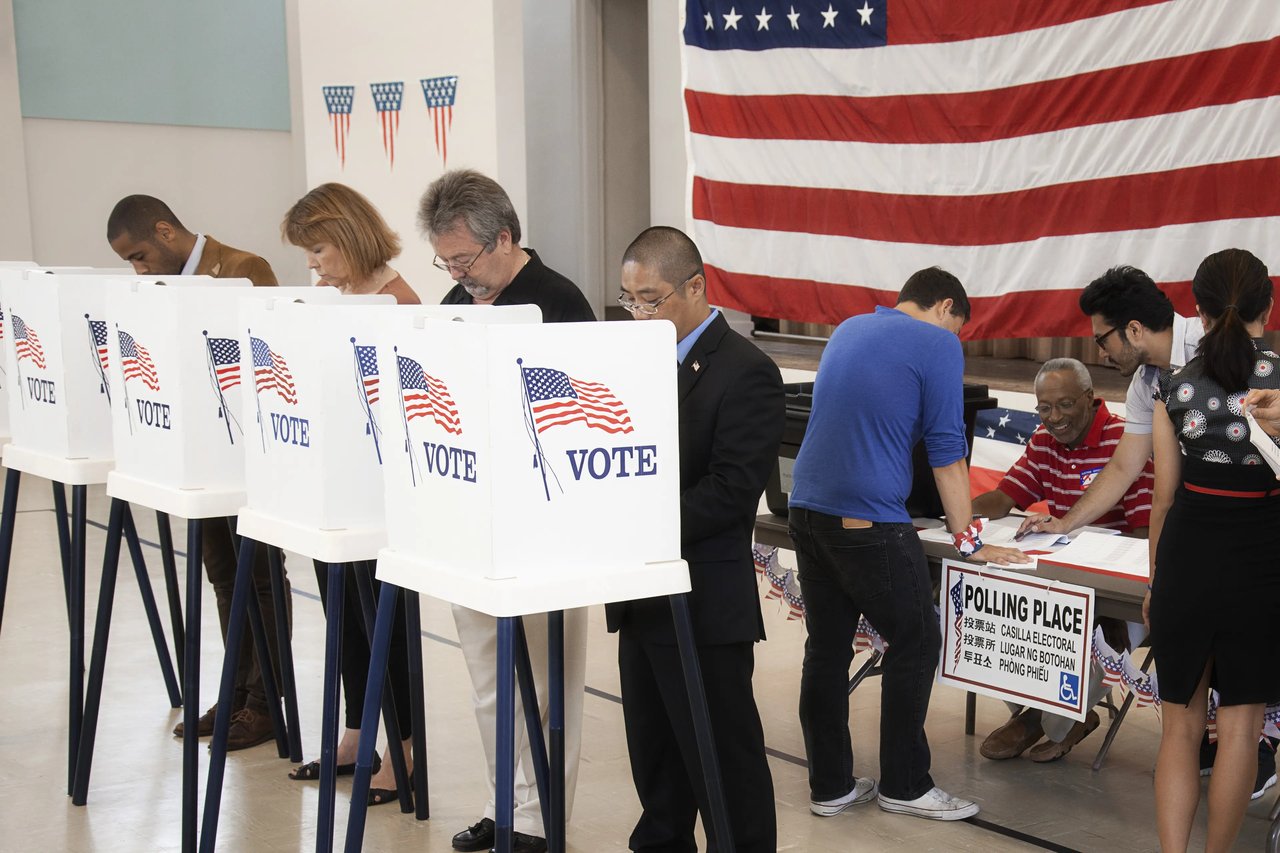
California's own history with daylight saving time runs through the ballot box. Voters rejected statewide daylight saving time in 1930 and again in 1940, then approved it with Proposition 12 in 1949.
In 2018, California voters approved Proposition 7, by roughly 60 percent. It repealed the 1949 measure and gave the Legislature the power to change California's daylight saving time period by a two-thirds vote, as long as the changes are consistent with federal law. If federal law ever allows it, the Legislature could also adopt permanent year-round daylight saving time.
There's a catch, and it's why we still change the clocks. Federal law currently lets states opt out of daylight saving time, which would mean permanent standard time, but it does not let a state adopt permanent daylight saving time on its own. That would take an act of Congress.
Where Things Stand in 2026
That brings us to the present. On July 14, 2026, the U.S. House of Representatives passed the Sunshine Protection Act, H.R. 139, by a vote of 308 to 117. The bill would make daylight saving time permanent, while allowing places that don't observe it, like Arizona and Hawaii, to stay on standard time. It would also allow states to opt out.
For it to become law, the Senate also has to pass it and the President has to sign it, and the Senate's prospects have been described as uncertain. As of early October, that hadn't happened. If it does become law, reporting suggests the last clock change would come in March 2027. A 2026 bill in the California Legislature, SB 1197, would take the opposite approach and move the state to permanent standard time.
The debate isn't really about whether to stop changing the clocks. Polling and public comments suggest many people want that. The disagreement is about which time to keep: permanent daylight saving time, with later sunsets year-round, or permanent standard time, with earlier sunrises. Until that's settled, Claremont will keep falling back in November and springing forward in March, with the next change on Sunday, March 14, 2027.
What the Change Means in Claremont
Falling back affects the rhythm of the whole town. In Claremont, sunset on Sunday arrives around 4:57 p.m., and by December 21, the shortest day of the year, it's around 4:45 p.m., with sunrise at about 6:52 a.m. That changes how evenings feel in the Village. Dinner on a patio starts in the dark, evening walks under the tree canopy need a flashlight, and the after-school hours get shorter.
The upside is brighter mornings. If you walk the dog before work or head to the Sunday Farmers & Artisans Market, which runs from 8 a.m. to 1 p.m. on Harvard Avenue, you'll notice it right away.
In March, the pattern flips. On March 14, 2027, sunset in Claremont jumps to around 6:57 p.m., and the long evenings return.
A Quick Fall-Back Checklist for Claremont Homeowners
The clock change is a handy reminder to handle a few household tasks:
- Check your smoke and carbon monoxide alarms. Many fire safety organizations suggest replacing batteries and testing alarms when the clocks change.
- Reset timers. Porch lights, outdoor lighting, and irrigation controllers without automatic time adjustment will need to be reset.
- Review your irrigation schedule. With cooler weather and the rainy season approaching, it's a good time to scale watering back. Our seasonal home maintenance guide for Claremont covers what to adjust.
- Replace your HVAC filter. It's an easy task to pair with the time change.
A Weekend for Slowing Down
Claremont is a good place to feel the seasons shift. The light goes golden earlier, the Village fills with people looking for something warm to eat, and the streets settle into their winter calm.
Concierge Realty Group is proud to be the number one real estate office in Claremont for listings and sales, and we've spent years helping people discover how it feels to live here through every season, not just the sunny ones. If you're thinking about a move to Claremont, we'd be glad to show you around.