If a commuter rail station opened two minutes from your neighborhood, would you expect your home to be worth more because of it? Most buyers would say yes without thinking twice. It is the standard real estate logic: proximity to transit adds value, distance from it subtracts value, and the effect fades out somewhere around a mile from the platform.
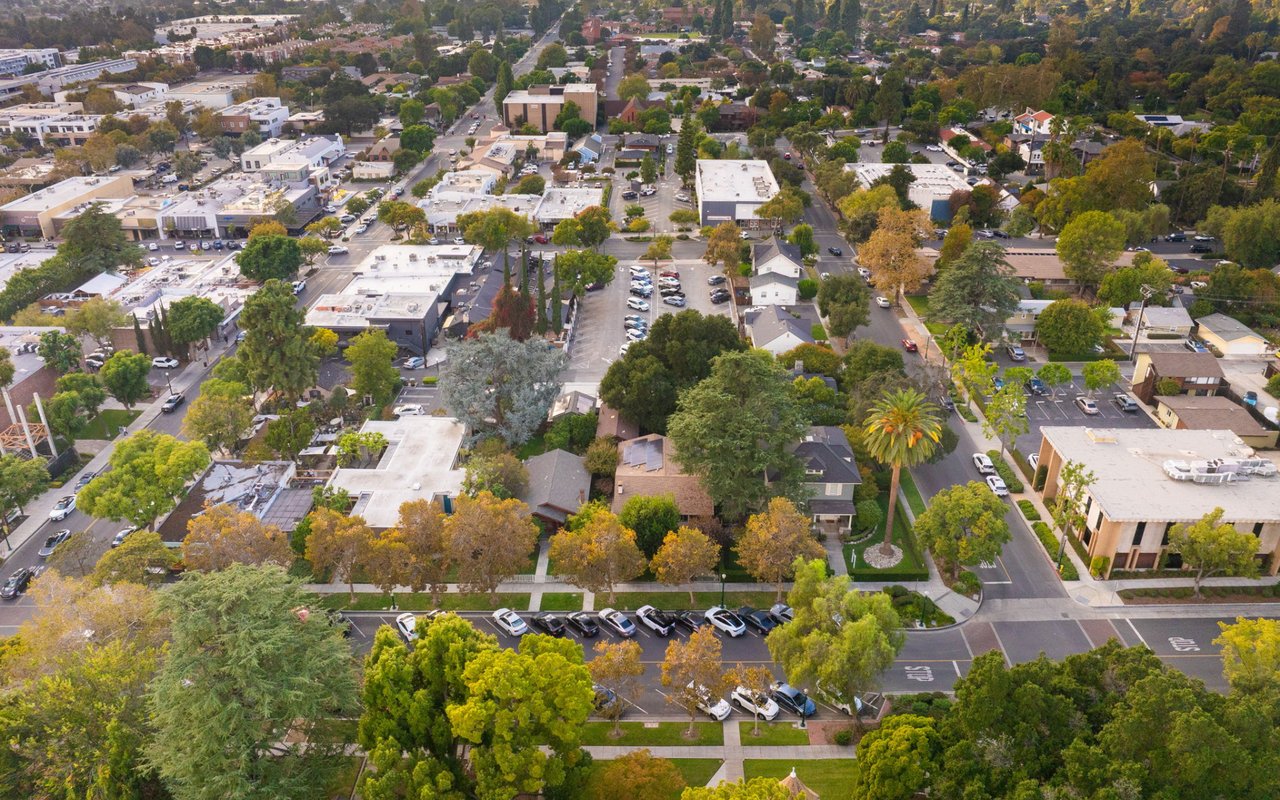
San Dimas is currently proving that logic incomplete. The Metro A Line station opened here on September 19, 2025, on San Dimas Avenue near Commercial Street, right behind the CVS plaza. It is real, it is running, and it is exactly the kind of infrastructure milestone that should be pulling nearby home values upward. But the sharpest price growth in San Dimas right now is not happening near the station. It is happening in a foothill submarket built around horse-keeping rights, well away from the platform, where the city's own zoning code caps density instead of encouraging it.
Understanding why requires looking at what the city is actually planning to build around that station, and what is actually selling in the hills above it.
What the City Is Planning for the Land Around the Platform
San Dimas has spent years preparing for this station through a Downtown Specific Plan, which includes a concept the city has referred to as Pioneer Square, envisioned as a mix of residential, hotel, and commercial uses anchoring the downtown. The city's housing element documents identify specific parcels near the Gold Line corridor as underused sites with aging structures and low improvement-to-land value ratios, meaning the buildings on them are worth far less than the dirt underneath. Several of these sites are slated for rezoning to allow 12 to 45 dwelling units per acre, which is density built for condos, townhomes, and apartment buildings, not single-family appreciation.
This is not speculation. It is the stated purpose of the zoning changes on file with the city. The parcels closest to the platform are being positioned to absorb new housing supply, not to command a single-family price premium for their walkability. When a city plans for that kind of supply increase, it works against the kind of scarcity-driven appreciation that usually follows a new transit stop in an already built-out single-family neighborhood.
The station itself carries some civic investment worth noting. Artists Eugene Daub and Anne Olsen Daub, a San Pedro-based team whose public work includes a Rosa Parks statue in the U.S. Capitol, designed bronze sculptural elements and ceramic panels for the platform meant to reflect the city's character. It is a nice touch for daily riders. It does not change the zoning math for the land around it.
Meanwhile, in the Hills: San Dimas Canyon
While the station area is being planned for density, a different submarket is telling a different story. San Dimas Canyon, a foothill pocket that sits apart from the flatland grid around downtown, posted a median sale price of $1.16 million over the three months ending June 2026, up 30.3 percent from the same period a year earlier.
That is a striking number next to a citywide median that has been flat to soft over the same window, generally reported somewhere in the high $800,000s to low $900,000s depending on the measure and the month. But the number needs a second look before anyone treats it as straightforward appreciation, because the price-per-square-foot figure for San Dimas Canyon actually fell 16.3 percent over the same period.
Put those two figures together and a different explanation appears. The median did not rise because identical homes suddenly became worth more per square foot. It rose because the mix of what sold shifted toward larger properties on larger lots, the kind that come with acreage rather than square footage as the primary asset. That is the signature of a market where scarcity, not renovation or transit access, is setting the price.
The Zoning Code That Makes This Possible
The scarcity in question is written directly into San Dimas's municipal code. Chapter 18.112 establishes a Private Horse Overlay Zone, and it is specific about what qualifies. A lot must be at least 11,000 square feet to keep two horses. An additional horse is allowed on parcels of 21,000 square feet, and beyond that the allowance grows by one horse per 7,500 square feet, capped at five horses per acre. A registered breeder can add three more animals with a permit.
Those thresholds cannot be zoned into existence somewhere else. A builder cannot subdivide a flatland parcel near the new station and manufacture an 11,000-square-foot horse lot with trail access. The supply of P-H-overlaid land in San Dimas is fixed by geography and by a code that has been on the books since the 1960s and 70s, with the core lot-size language dating to 1961. That fixed supply is exactly what allows a foothill submarket to keep pulling premium prices even while the citywide number softens and the station-adjacent parcels get rezoned for apartments.
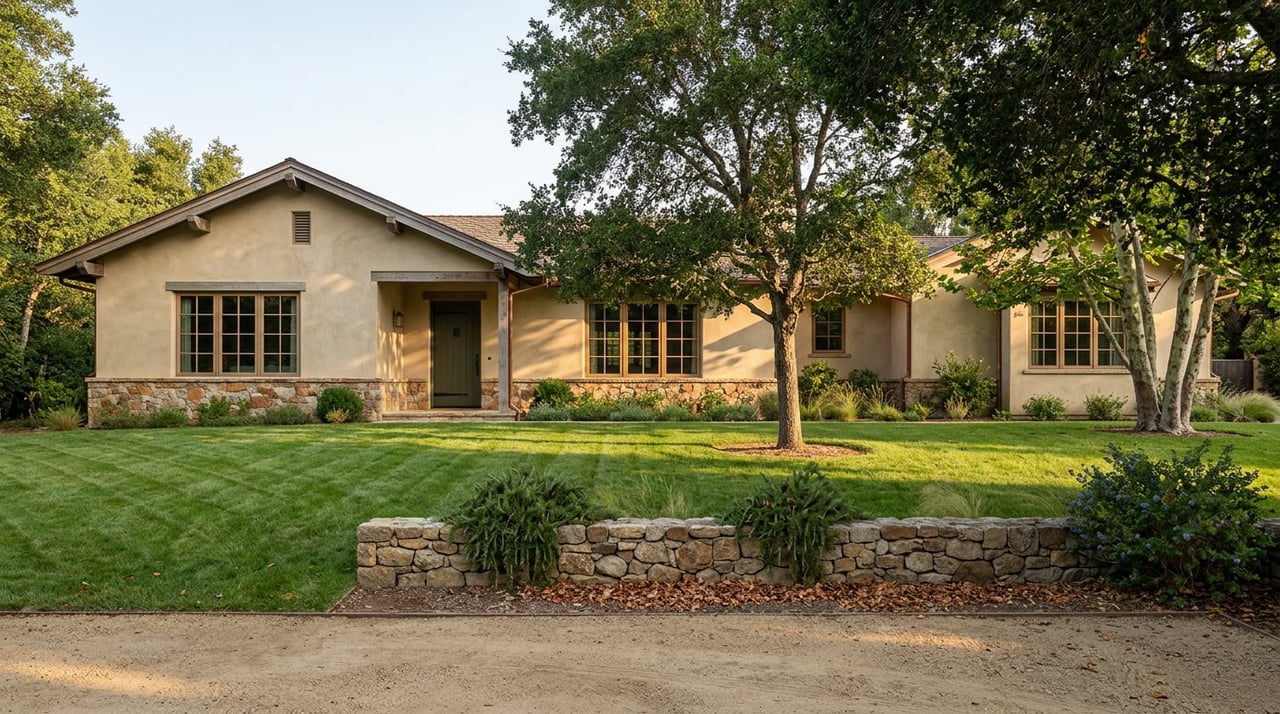
San Dimas's equestrian estates elsewhere in the city reinforce the same pattern. Listings for these properties back directly onto trail systems like the Walnut Creek Trail and are shopped on arena space, stable count, and tack room condition as much as bedroom count. That is a different buyer than the one comparing commute times to a new rail platform.
Two Markets, One ZIP Code
| Station Area (Downtown) | San Dimas Canyon (Foothill) | |
|---|---|---|
| City planning direction | Rezoning toward 12 to 45 units per acre, mixed use | Governed by fixed-lot Private Horse Overlay Zone |
| Recent price signal | Land value exceeds structure value on target parcels | Median up sharply, price per square foot down |
| What is scarce | Buildable, consolidated parcels near transit | Lots of 11,000+ square feet with horse rights |
| Buyer profile implied | Density-tolerant, transit-oriented | Acreage- and equestrian-motivated |
San Dimas also carries its Western Town identity into this picture. The wooden sidewalks and storefronts along Route 66 downtown, the recreation draw of Bonelli Regional Park and Raging Waters, and the equestrian culture that shows up in local trail networks are not incidental branding. They describe two genuinely different reasons someone chooses this city, and right now those two reasons are producing two different price trends.
What This Means If You Are Comparing San Dimas on a Portal Search
A single median price for San Dimas flattens both of these stories into one number, and that number will mislead you depending on which half of the city you are actually shopping. If you are looking at a home within easy walking distance of the new station, ask directly whether the parcel or the surrounding block falls inside a Downtown Specific Plan rezoning area, since that designation affects what could be built next door over the life of your ownership. If you are looking at a foothill or hillside property, ask whether the lot carries the P-H overlay designation and what that means for horse-keeping rights, because that designation is part of what is holding value in that submarket regardless of citywide softness.
This is the kind of distinction that does not show up on a listing card. It shows up when someone who works this market daily pulls the zoning map and the specific plan documents before you write an offer.
A Few Direct Answers
Does every home in San Dimas allow horses? No. Horse-keeping rights depend on the P-H Private Horse Overlay Zone designation and minimum lot size under Chapter 18.112 of the municipal code. A property has to carry that overlay and meet the 11,000-square-foot threshold before any horse allowance applies.
Will the station-area rezoning affect a home I already own nearby? The rezoning targets specific identified parcels for redevelopment, generally sites with underused or aging commercial structures, not existing single-family blocks broadly. If your property sits near one of those identified sites, it is worth asking what is planned for that specific parcel and on what timeline.
Is San Dimas Canyon's price jump a sign the whole city is heating up? Not necessarily. The rise in median price there coincided with a drop in price per square foot, which points to a shift in what kind of homes sold rather than a uniform increase in value across comparable properties.
Whichever half of San Dimas you are weighing, the right first move is the same: look past the citywide median and find out which story your specific block is actually living. If you want a walkthrough of what the zoning map and the Downtown Specific Plan mean for a particular street, or how to read a listing in San Dimas Canyon against its equestrian designation, Concierge Realty Group can help you schedule a consultation and get a clear answer before you write an offer.