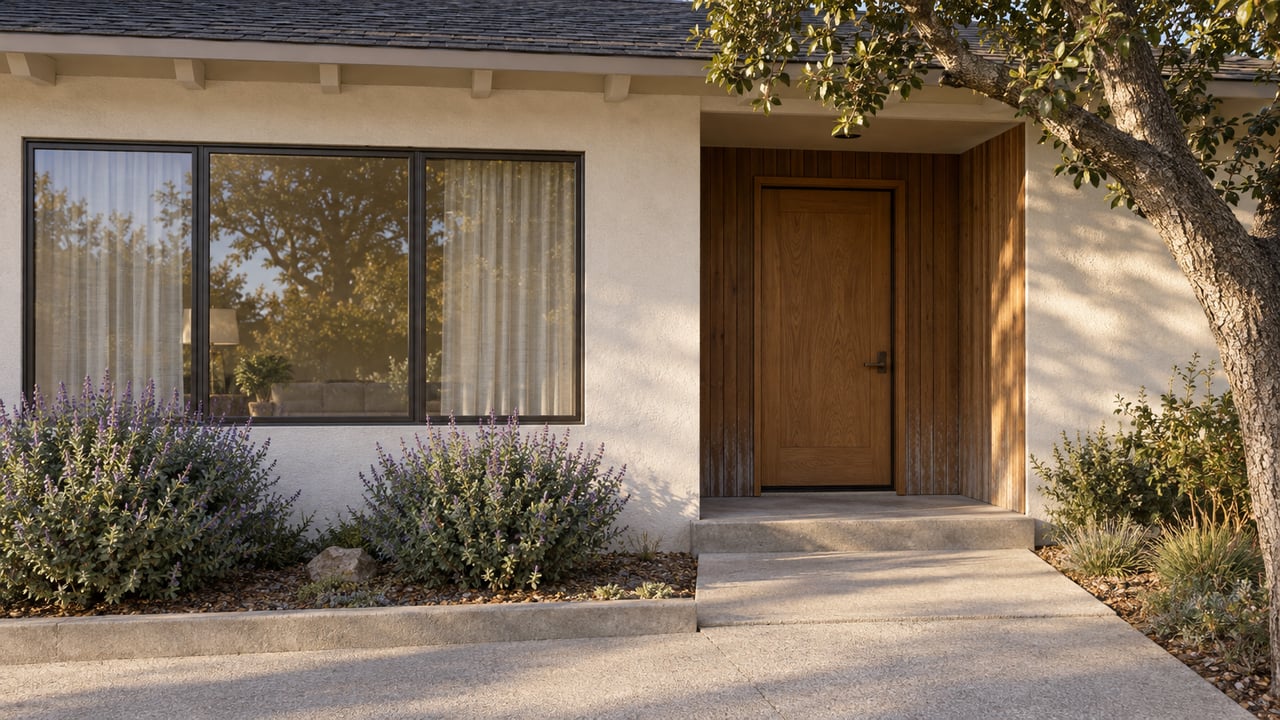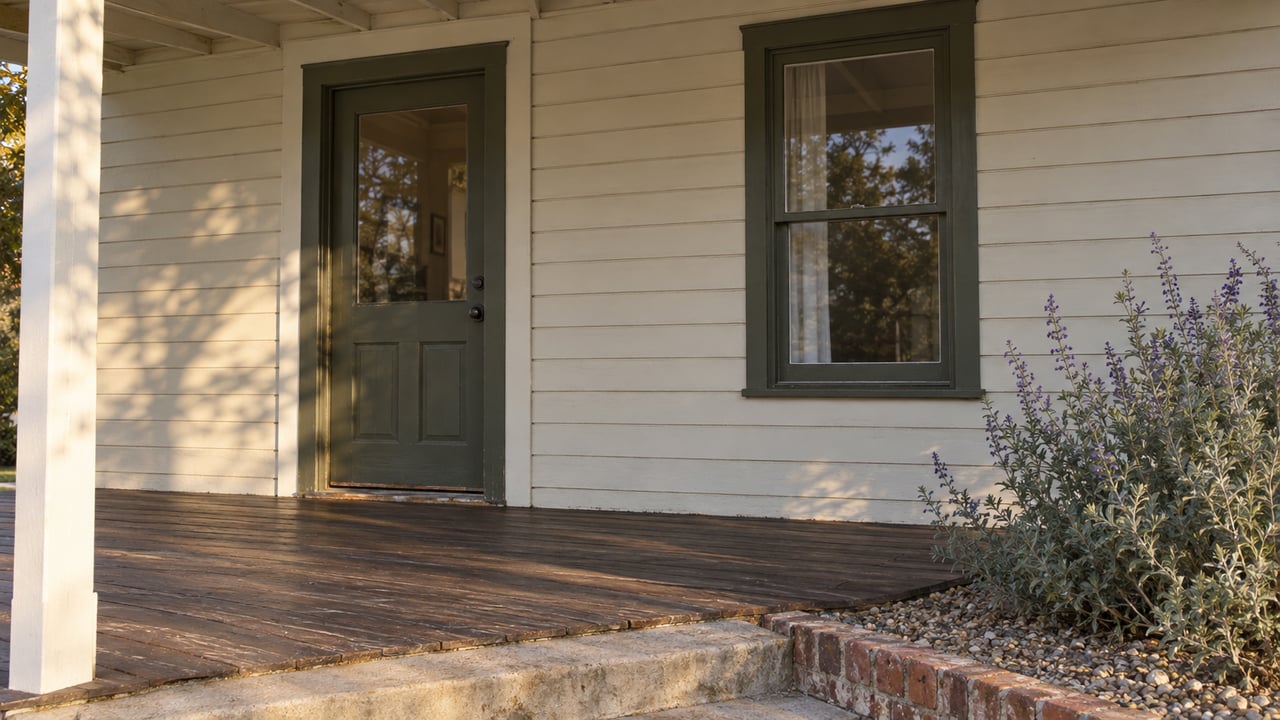
The word shows up in almost every listing south of Foothill Boulevard. A 1908 bungalow on Third Street gets called historic. So does a 2003 Craftsman-style infill home built to match the block. So does a 1960s ranch that just happens to be old. In many listings, historic is used descriptively, to refer to a home's character, the street's appearance, or its connection to the neighborhood's story. Occasionally, though, the word is doing something else entirely. It's pointing at a legal instrument attached to the property A buyer can review the property records to see whether a Mills Act contract is attached.
No Ordinance, But Two Specific Plans
La Verne doesn't have a citywide historic preservation ordinance. The Los Angeles Conservancy, which tracks preservation policy across the county, describes the city as taking an alternate approach: no blanket ordinance, but real protection through two specific plan areas that function as historic districts with design review, the Lordsburg Specific Plan and the Old Town La Verne Specific Plan, adopted in 2013. There's no historic resource survey covering the whole city either. The only completed survey covers Old Town itself, finished in 1986.
That distinction matters more than it sounds. A specific plan area means renovations and new construction inside its boundary go through design review aimed at keeping the district's character intact. It doesn't mean every old house inside the line is individually landmarked, and it doesn't mean the city can force a landmark designation on a private home without the owner's consent. Individual landmark status in La Verne requires a council resolution, and while either the owner or the city can start that process, city-initiated nominations are limited to commercial buildings. A homeowner on Third Street isn't going to wake up to a landmark plaque they didn't ask for.
Where This Actually Applies
The historic core sits south of Foothill Boulevard, on both sides of North White Avenue, along streets like First, Second, and Third, D Street, and Bonita Avenue. The Lordsburg portion of that footprint runs south of Bonita and west of White. This is the same ground the city references on its own Old Town page, tracing the district back to 1887, when it was laid out as a stop for the Santa Fe Railroad.
Walk those streets and the housing stock is genuinely mixed in age even though the marketing language treats it as one thing. Some structures date to the citrus-era 1900s. Others are 1960s tract houses. Some are recent builds designed to echo the Craftsman look of the original district. All three can get called historic in a listing description. Specific-plan design review depends on whether a property lies within a plan boundary, not on the age or style of its structure.
The Mills Act: Tax Treatment and Owner Obligations
According to the California Office of Historic Preservation, California's Mills Act, in place statewide since 1972, lets participating cities and counties enter into contracts with owners of qualified historic properties. The contract provides an alternate method for calculating property tax. La Verne is on the Los Angeles Conservancy's list of county jurisdictions that have adopted the program, alongside neighbors like Claremont, Glendora, San Dimas, and Pomona.
A Mills Act property is assessed differently from many other California properties. the county assessor calculates the property's value using an income approach, essentially treating the home as if it were a rental and capitalizing that income into a value. The assessor then compares that number to both the market value and the Prop 13 factored base year value, and enrolls whichever of the three is lowest. According to the Los Angeles County Assessor's own description of the program, this restricted value can run considerably below what a straightforward Prop 13 calculation would produce.
The contract itself runs for an initial ten-year term and rolls forward automatically each year, so it's always ten years out. The contract comes with obligations. When the home sells, according to guidance published by the City of Los Angeles's own Mills Act program, the contract transfers to the new owner automatically. A buyer doesn't opt into it. They inherit it.
Why That Transfer Matters at the Table
A buyer evaluating two similarly priced homes in Old Town, one with a Mills Act contract and one without, is also comparing their tax treatment. The Mills Act home may carry a materially lower annual bill than a neighboring property that just changed hands at the same price, because its assessed value isn't reset the same way. That can be a real advantage, but the contract also comes with terms to understand.
The reverse scenario happens too. A seller who let deferred maintenance slide on a Mills Act property may be walking into a contract review at exactly the moment they want a clean, fast close. Buyers should check whether a contract is in place and review its terms before the contingency period ends. The preliminary title report and county assessor's records can help identify an existing contract.
The Physical Condition Question Is Separate
None of this speaks to whether the house itself is in good shape. A Mills Act contract is about preservation commitment and tax treatment. It says nothing about wiring, plumbing, or foundation work. A local property inspection firm working in La Verne has documented what pre-war construction in this pocket of the city can actually look like up close: a 1925 bungalow near Old Town found with partial knob-and-tube wiring still active, a foundation that had never been seismically retrofitted, and plumbing supply lines showing significant corrosion. That's not a knock on the house. It's what a hundred-year-old structure often carries, historic designation or not, and it's a separate line of due diligence from anything the Mills Act touches.
Why the City Chose This Path
The specific-plan approach La Verne settled on didn't come from nowhere. In the early 1970s, a group calling itself SOLVE, Save Old La Verne's Environment, formed after city planners rezoned part of Old Town from single-family to a designation that would have allowed old homes to be divided into apartments or razed outright. According to the La Verne Historical Society, SOLVE members raised money through annual home tours, got the zoning reversed, and pushed to have a historic element added to the city's master plan. A second organization, the La Verne Heritage Foundation, formed in 1984 and later relocated and restored an 1883 farmhouse, the Weber House, as a preserved piece of the city's citrus-era history.
That civic history is why La Verne ended up with design review districts and a Mills Act program instead of a single sweeping ordinance. The protections exist because residents fought for them piecemeal, over decades, rather than through one comprehensive rule. It's a reasonable explanation for why the current system feels layered rather than uniform, and why a buyer has to ask specific questions rather than trust a single label.
Before Writing an Offer on a "Historic" Listing
A few questions are worth asking directly, before an offer goes in on anything described as historic in Old Town:
- Is there an active Mills Act contract recorded against this property, and if so, what does the maintenance schedule require going forward?
- Does the address fall inside the Old Town La Verne Specific Plan or Lordsburg Specific Plan boundary, and would any planned exterior work trigger design review?
- Has the structure been individually landmarked, or is the historic language purely descriptive?
- What year was the home actually built, and has a licensed inspector evaluated wiring, plumbing, and foundation condition specific to that era?
Two Questions Worth a Straight Answer
Does buying a Mills Act property reset the tax bill to the sale price? Not necessarily. Because the assessor compares the income-approach value, the market value, and the Prop 13 value and enrolls the lowest, a new buyer can end up with a tax bill closer to the restricted Mills Act figure than to the purchase price.
What should a buyer know about an inherited contract? It's a term to understand before the offer is written.
Old Town's history is part of what makes these streets worth the premium buyers already pay for them. Understanding the obligations and potential tax effects associated with a Mills Act contract helps buyers evaluate a property. If you're weighing an offer on a listing with the word historic in the description, or preparing to sell one, Concierge Realty Group can help you review the information available for that specific address. Schedule a Consultation.
This article is general information, not legal, tax or financial advice. Consult a qualified professional about your situation.